What Is Gold Leasing? A Guide to a 100+ Year Old Credit Market
·
5
MINUTES
·
By:
Ari Pingle
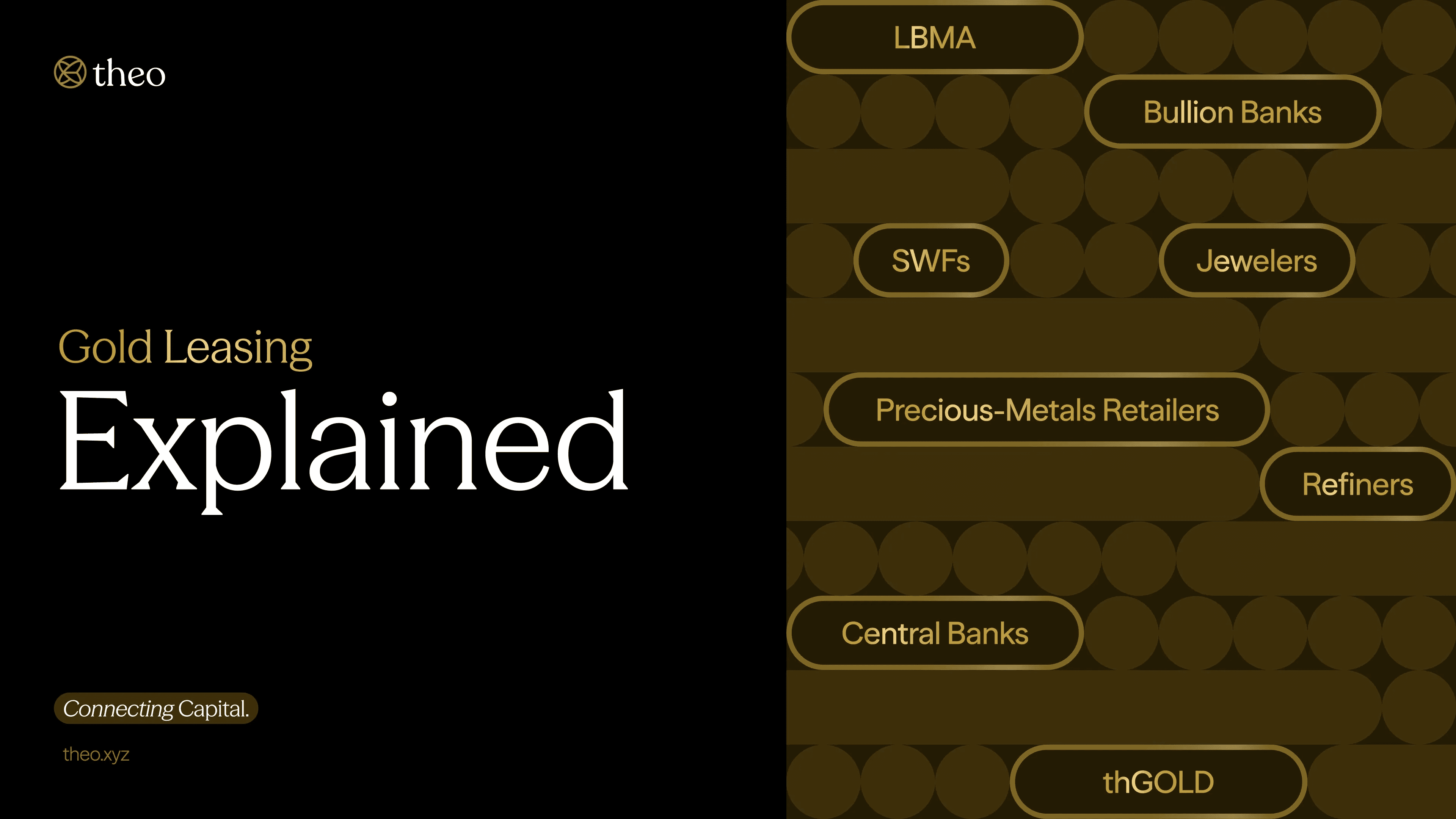
Gold leasing has financed the global precious metals trade for over a century. Until thUSD, crypto had tapped almost none of it.
The next phase of onchain yield is built on claims to real economic activity, structured by institutional counterparties and cleared on the venues that have priced the underlying assets for decades.
RWAs are driving this shift. When a product is backed by institutional asset managers, cleared through venues like the LBMA and the CME, and built on legal and operational standards that institutional capital actually recognizes, it operates as a credit market that happens to settle onchain.
Gold leasing is one of the clearest examples. It's a credit market that has been running continuously for more than a hundred years, financing the refiners, dealers, and jewelers who keep the global gold trade moving. It clears through the LBMA, the de facto OTC exchange for gold. It prices off the Gold Forward Offer Rate (GOFO), the institutional benchmark for gold-versus-dollar lending on 1, 3, and 6-month tenors. Central banks alone lend roughly 2,000 tonnes of gold a year through it, well over $200 billion in annual volume at today's prices.
That's the market thUSD is built on. Here's how it works.
The Mechanics
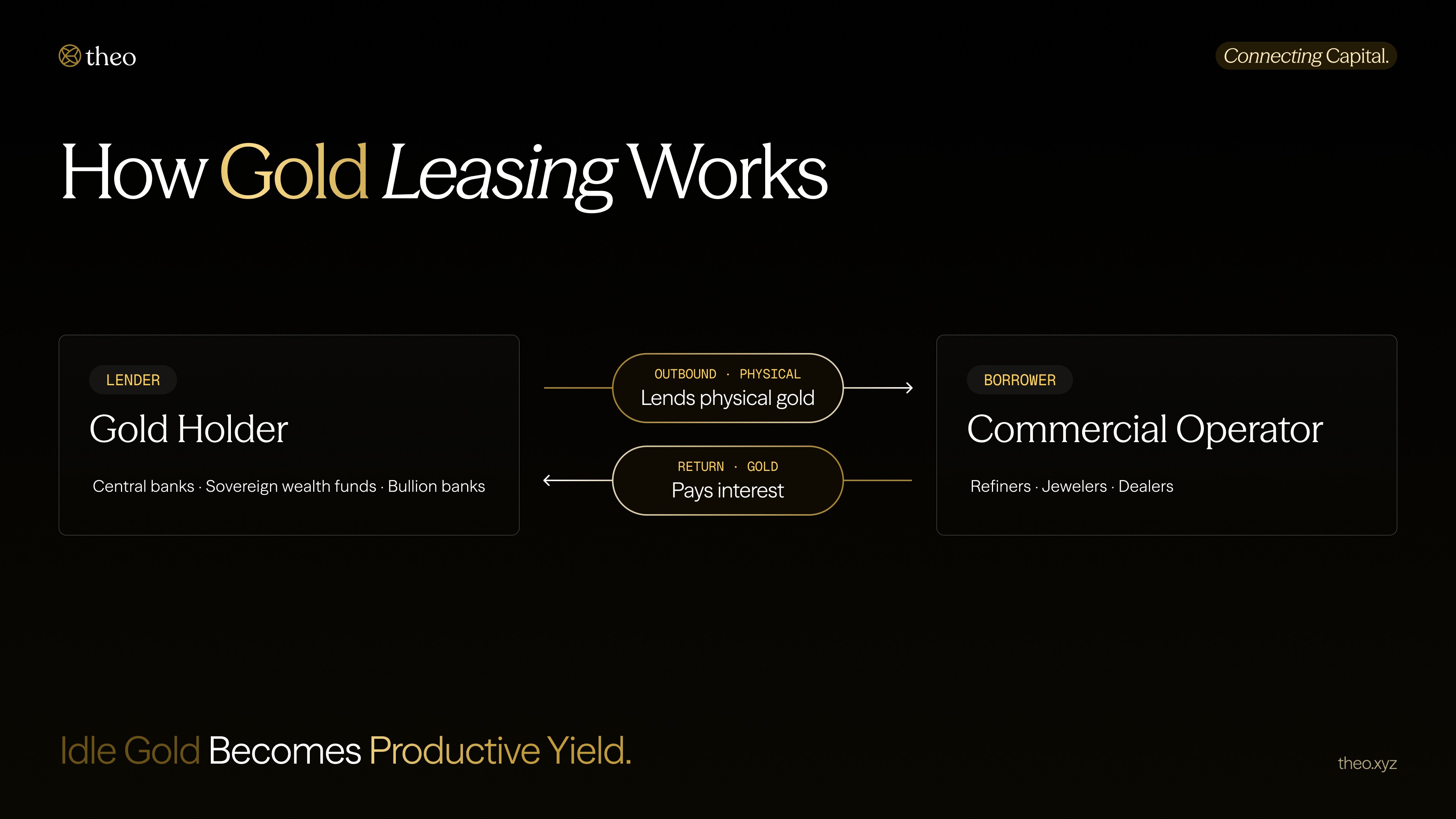
A gold leasing trade is one of the simpler structures in institutional credit. A gold holder (a central bank, a sovereign, a bullion bank) lends physical gold to a commercial operator for a fixed term. The operator (a refiner, a jeweler, a dealer) uses the gold as inventory and pays interest in return.
Both sides have a reason to be there. Operators get the cheapest inventory financing available to them. Holders earn yield on reserves that would otherwise sit idle in a vault. The trade is structurally win-win, which is why it's been running for over a century.
Why It's Safe
Gold leasing is one of the safest credit markets in the world by construction.
Every lease is collateralized by the physical gold itself. Not a claim on gold, not a derivative. The metal. Counterparties are credit-vetted commercial entities with real balance sheets and operating history. The market clears through the LBMA, with rates pricing off GOFO across standard tenors.
For an institutional credit market, the loss history is unusually clean. Sovereign-grade lender base, real-economy borrowers, fully collateralized. That's the kind of structure that explains why the market has survived as long as it has.
Theo's Additional Layers
thUSD's leases stack additional protection on top of the standard institutional setup:
Insured and reinsured by Lloyd's of London
Bankruptcy remote: leases sit outside the borrower's capital stack, so creditor claims can't reach the gold
Overcollateralized in physical gold
If margin drops, Theo calls the collateral back and takes the gold
That's more protective layers than almost any other form of institutional credit, onchain or off.
How thUSD Plugs In
thUSD enters this market the same way any commercial lender does. The fund holds physical gold and lends it to a credit-vetted precious-metals retailer with real revenue and operating history. The borrower finances inventory. Gold is returned with interest at term.
It's the same trade the LBMA has cleared for fifty years. The only thing new is that it's now accessible to onchain capital.
Structural, Not Cyclical
This is what makes the yield in thUSD structural. It moves with physical demand for gold: jewelry season, refiner working capital, real-economy flows. It's a claim on a credit market with a hundred-year track record, priced off institutional benchmarks, cleared through institutional venues.
That structural quality matters more as more capital looks for somewhere durable to sit. Gold leasing has compounded quietly through every credit cycle, currency regime, and macro environment for over a century. Its returns track the working capital needs of the global precious metals economy.
The infrastructure has always been there. thUSD is the connection.